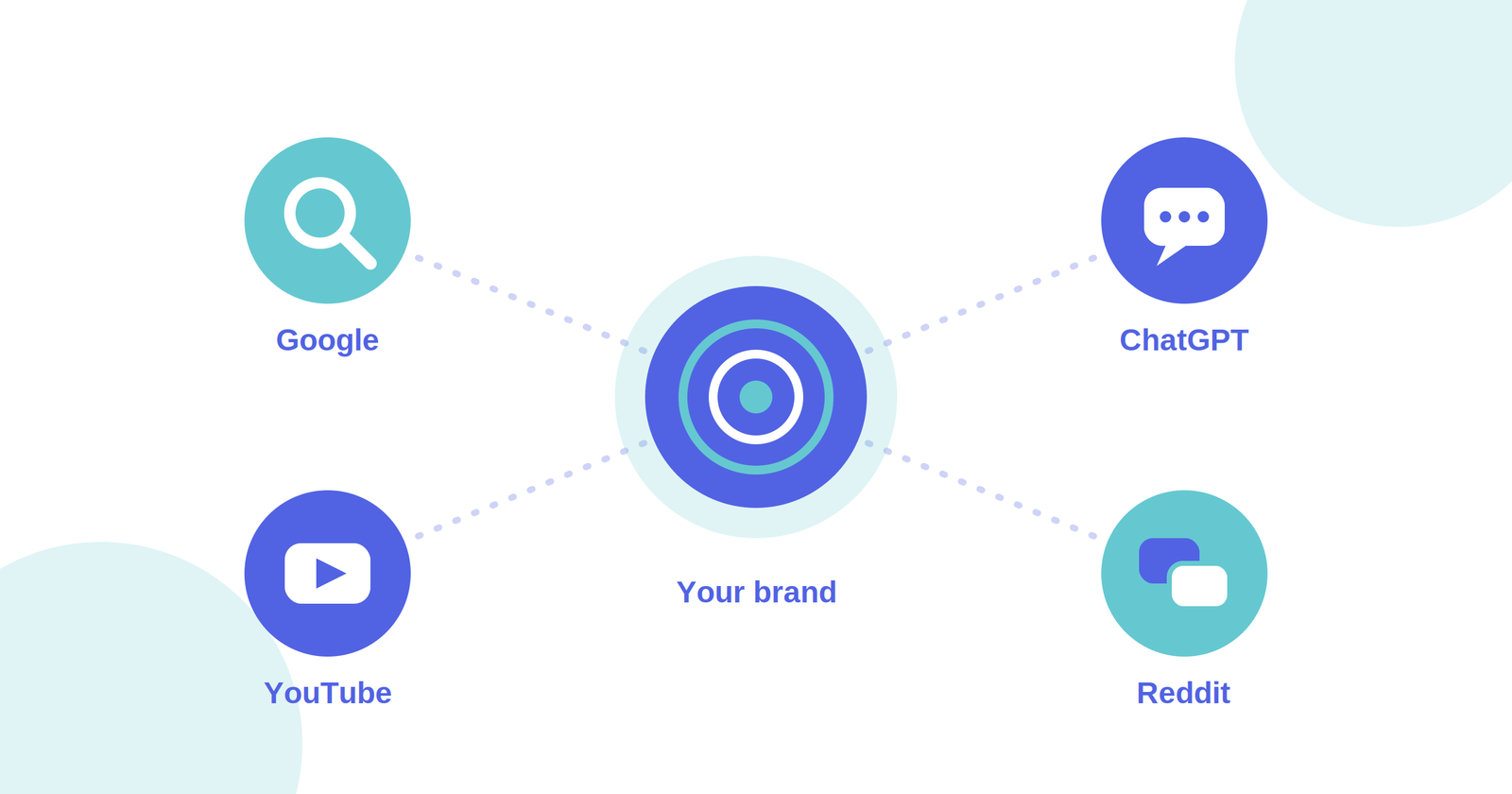
You rank well on Google, your traffic looks healthy, and yet when a customer asks ChatGPT, Gemini, or Perplexity for the best provider in your field, your brand is nowhere in the answer. That gap is quickly becoming one of the most expensive blind spots in digital marketing. Website visibility in AI search is now a separate challenge from classic SEO, and many sites that perform well in traditional results are almost invisible in AI-generated answers.
This guide explains how AI tools decide which websites to mention, the five most common reasons your site gets overlooked, and a practical five-step plan to fix it. You will also learn how to measure progress and when it makes sense to bring in AI SEO services.
What Is Website Visibility in AI Search?
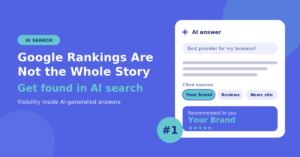
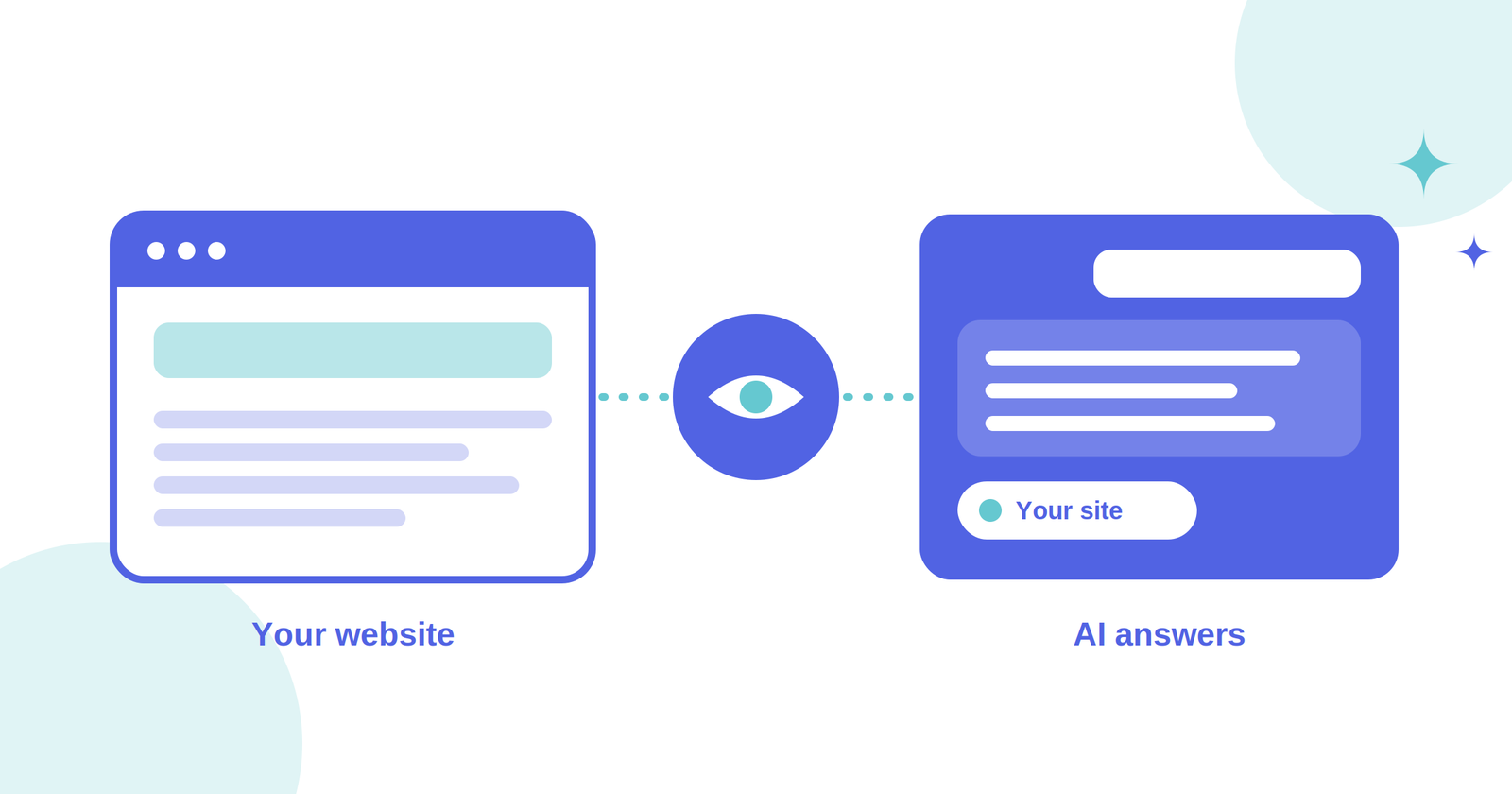
Website visibility in AI search refers to how often and how accurately your site and brand appear in answers generated by AI tools such as ChatGPT, Google AI Overviews, Gemini, Perplexity, and Copilot. It shows up in three forms:
- Citations: your pages are linked as sources within the answer.
- Mentions: your brand is named in the answer, even without a link.
- Recommendations: your brand is suggested when a user asks what to buy or who to hire.
Traditional SEO measured rankings and clicks. AI answers often satisfy users without a click, so being cited, mentioned, or recommended becomes the new goal. Interest in this shift is rising fast. According to Ahrefs, search demand for “generative engine optimization” grew 161% year over year to around 12,000 monthly searches. Marketers have noticed that strong rankings alone do not guarantee website visibility in AI search.
How AI Tools Decide Which Websites to Mention
AI search tools do not simply copy the top Google result. Most follow a similar process. First, they interpret the question. Then they retrieve information from the web or from a search index. Finally, they write an answer and decide which sources and brands to include.
Three factors tend to matter most during retrieval and selection:
- Accessibility: Can the tool actually reach and read your page?
- Clarity: Can it pull a clean, accurate answer from your content?
- Trust: Do other credible sources confirm what you say about yourself?
Different tools weigh these factors differently, and their answers can change from one day to the next. Still, if your site fails any of the three, your website visibility in AI search will suffer, no matter how good your design or offer is. This matters because AI answers shape shortlists. A buyer who sees three recommended brands in a ChatGPT response often researches only those three. Being absent from that shortlist means losing the customer before your website ever gets a visit, which is why website visibility in AI search deserves a place in your marketing plan, not just your technical backlog. The five causes below map directly to these factors.
Why Website Visibility in AI Search Is Low: 5 Common Causes
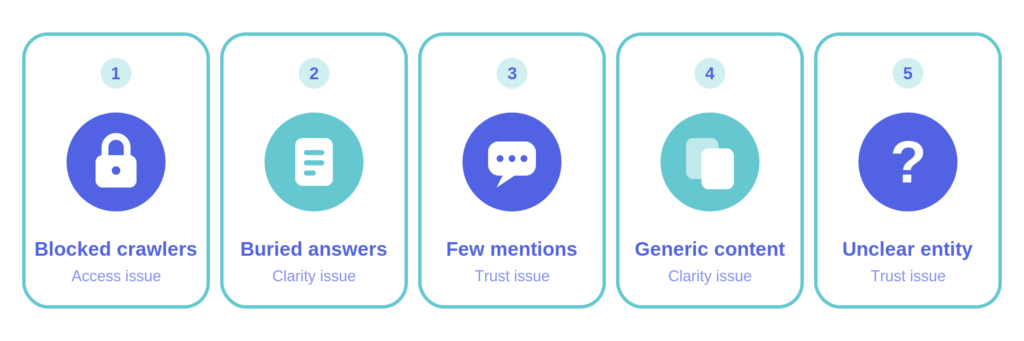
1. AI Crawlers Cannot Access or Read Your Pages
Technical barriers are the fastest way to disappear. Your robots.txt file might block AI crawlers by accident, a security tool might challenge bots, or key content might load only through JavaScript, which many crawlers handle poorly. Important text should be present in the page’s initial HTML.
It also helps to know that AI companies often use separate crawlers for model training and for search features. OpenAI, for example, documents different bots for these purposes, so blocking one does not automatically affect the other. Review which bots you block and why. Also, confirm that your pages are indexable by Google, since AI Overviews draw on pages eligible to appear in Google Search.
2. Your Content Does Not Answer Questions Directly
Long introductions, vague claims, and buried answers make content hard to quote. AI tools favor pages where a clear question is followed by a concise answer. If your service page is full of slogans and lacks a clear statement of what you do, who you serve, and what the process involves, the tool has nothing safe to reuse. Tables, lists, and short summaries help too, because they are easier for a model to parse and restate correctly. Pages that bury the answer in the fourth paragraph often lose out to a competitor who states it in the first sentence.
3. Few Trusted Sources Mention Your Brand
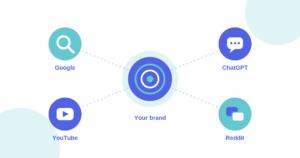
AI systems look beyond your own website. Reviews, news coverage, industry directories, community discussions, and expert roundups all help confirm that your brand is real and relevant. A site with strong on-page content but almost no third-party mentions is easy to skip. This is one of the biggest hidden weaknesses in website visibility in AI search.
4. Your Content Is Generic
If your article repeats what ten other sites already say, an AI tool has no reason to prefer yours. Original data, firsthand experience, clear opinions, and specific examples give AI systems something distinctive to reference. Generic, mass-produced content blends into the background and rarely earns a citation.
5. Your Brand Entity Is Unclear
AI tools work with entities such as companies, products, people, and places. If your name, services, and location are described differently across your website, social profiles, and directories, models struggle to connect the dots. Missing structured data and a thin About page make the problem worse.
Quick Self-Check: Is Your Site Invisible?
Answer these six questions honestly. Each “no” points to a fix later in this guide.
- Do you appear when you ask AI tools your customers’ top questions?
- Do you want AI crawlers allowed in your robots.txt and firewall settings?
- Does every key page open with a direct, quotable answer?
- Is your brand described the same way on every profile and directory?
- Do reviews and independent sites mention you regularly?
- Do you publish original data or firsthand examples?
If you answered “no” to three or more, your website visibility in AI search likely needs attention now.
The 5-Step Fix: How to Become Visible in AI Search
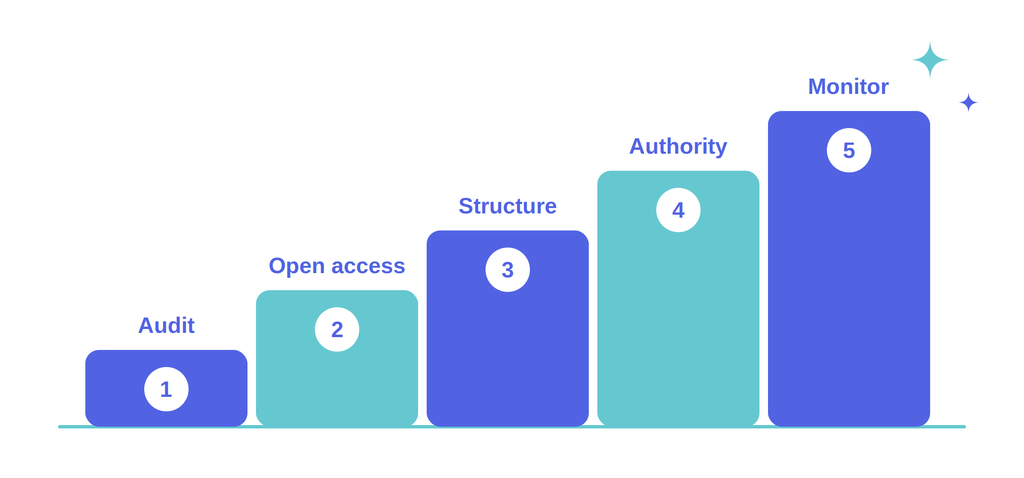
Step 1: Audit Your Current Position
Before changing anything, find out where you stand. Write a list of 20 to 30 questions your customers actually ask. Run each one through ChatGPT, Gemini, Perplexity, and Google. Record whether your brand is mentioned, which competitors appear, which sources are cited, and whether the description of your business is accurate. Save screenshots and note the date, since answers shift. This baseline serves as the benchmark for your website’s visibility in AI search.
Step 2: Open the Doors
Fix access issues first. Review your robots.txt, firewall, and CDN settings to ensure legitimate AI search crawlers can access your public pages. Make sure important content appears in the HTML and not only after scripts run. Keep a clean XML sitemap, fast-loading pages, and sensible canonical tags. Some sites also add an llms.txt file but treat it as optional, as there is no firm evidence that major AI search tools depend on it.
Step 3: Structure Content for Extraction
Rewrite key pages so answers are easy to lift:
- Start each section with a direct answer in two or three sentences.
- Use question-style headings that match real queries.
- Add short definitions, step lists, comparison tables, and FAQs.
- State facts plainly: services, locations, pricing ranges, and proof.
- Add schema markup such as Organization, Article, Product, FAQPage, and LocalBusiness where relevant.
Think of this as making your pages quote-ready. Review each page by asking whether someone could copy a paragraph into an answer without needing more context. It is the most direct way to strengthen website visibility in AI search from your own site.
Step 4: Build Authority Beyond Your Website
Earn mentions in the places AI tools use for confirmation. Pursue customer reviews, guest articles, industry directories, podcasts, and PR coverage. Take part in communities such as Reddit and professional forums with real, helpful answers. Publish original research or benchmarks that others want to cite. Keep your brand description consistent everywhere it appears so every source tells the same story. Strong off-site signals lift website visibility in AI search because models cross-check claims against independent sources.
Step 5: Monitor and Improve Every Month
AI answers change quickly. Repeat your question set monthly, track movement, and update pages that are not performing. Refresh statistics, add new FAQs based on real customer questions, and correct any inaccurate descriptions at the source. Treat website visibility in AI search as an ongoing program, not a one-time project.
How to Measure Website Visibility in AI Search
You cannot manage what you do not measure. Build a simple monthly scorecard that combines direct and supporting signals. Keep the same questions and the same tools each month so the numbers stay comparable and the trends mean something.

Core Metrics
- Mention rate: the percentage of tracked questions where your brand appears.
- Citation rate: how often your pages are linked as sources.
- Share of voice: your mentions compared with competitors.
- Accuracy: whether AI descriptions of your business are correct.
- Sentiment: whether the context is positive, neutral, or negative.
Supporting Signals
Watch referral traffic from AI platforms in your analytics, branded search growth in Google Search Console, and direct traffic. People who first meet your brand in an AI answer often arrive later through a branded search, so rising branded queries are a strong sign that website visibility in AI search is improving.
Tracking tools are still maturing, and AI answers vary by user, so rely on trends over time rather than single snapshots.
Common Mistakes That Hurt Website Visibility in AI Search
- Blocking every AI bot without understanding the difference between training and search access.
- Hiding key content behind scripts, tabs, or login walls.
- Publishing generic pages with no original insight.
- Ignoring third-party reviews and mentions.
- Describing your brand inconsistently across the web.
- Chasing tricks instead of fundamentals.
- Skipping measurement and guessing what works.
Avoiding these errors helps protect your website’s visibility in AI search as you build momentum.
When to Bring In AI SEO Services
Many businesses can handle the basics in-house, especially the audit and content updates. But the work spans technical SEO, content strategy, digital PR, and ongoing monitoring, which is a lot for a small team. AI SEO services can help in several ways:
- Run a full AI visibility audit and competitor comparison.
- Fix technical access, schema, and site structure issues.
- Rewrite priority pages so they are quote-ready.
- Build the third-party mentions that AI tools trust.
- Set up monthly tracking and reporting.
- Prioritize the pages and questions that drive revenue first.
Look for a provider that explains its methods clearly, avoids guaranteed-ranking promises, and reports on mentions and citations, not only traffic. Nobody controls AI answers, but a disciplined program can improve your odds of lasting website visibility in AI search.
Final Thoughts: Your 30-Day Action Plan
AI tools are becoming a front door to your business. Websites that stay invisible in those answers will lose recognition even if their classic rankings hold. The good news is that the fix is practical, and you can start this week. Remember that AI search is still evolving. Tools update their models and sources often, so the winning approach is steady improvement rather than a single big push. Brands that keep their content accurate, helpful, and well supported by outside mentions will adapt more easily to each change.
- Week 1: Run your question audit and record the baseline.
- Week 2: Fix crawler access and technical basics.
- Week 3: Rewrite your top 5 pages to provide direct answers and add schema.
- Week 4: Start earning third-party mentions and set up your monthly scorecard.
Start with one page and one set of questions. The sooner you improve website visibility in AI search, the harder it becomes for competitors to take your place in the answer.